The meadow
The Meadow Year
A traditional hay meadow follows a simple yearly rhythm. Understanding it is the key to keeping wild flowers, whether in a field or a corner of the garden.
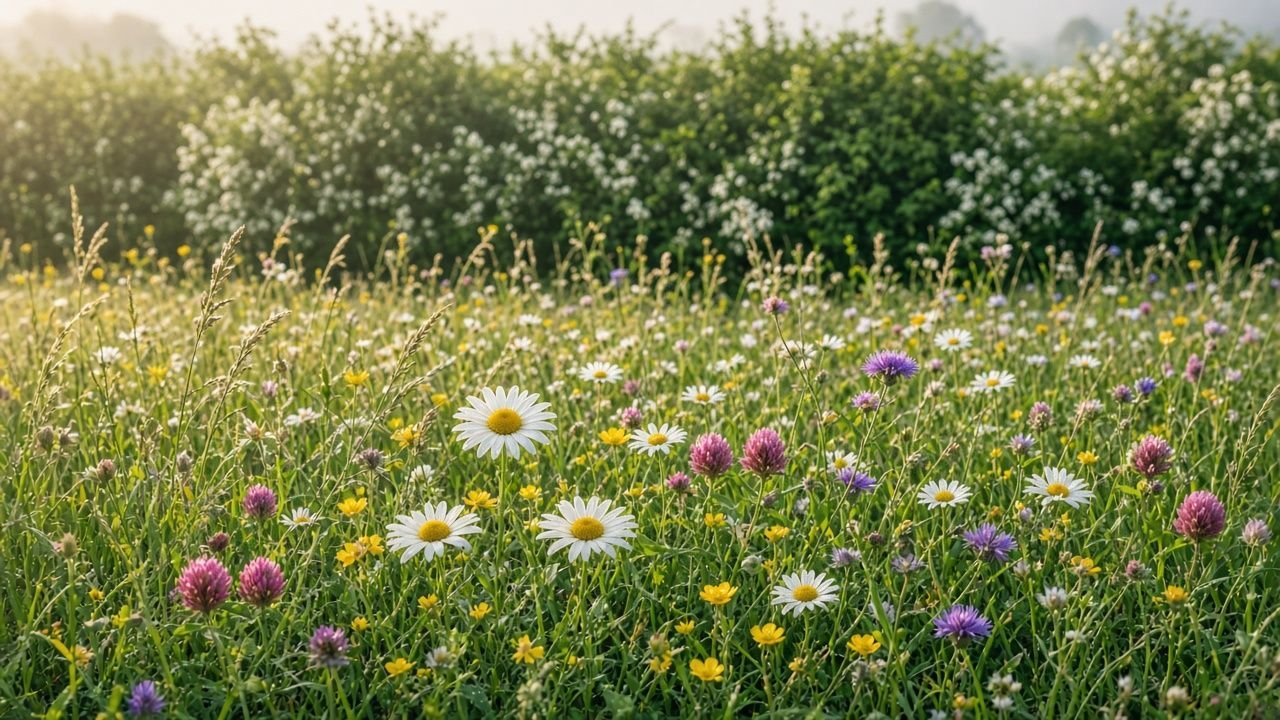
Spring: let it grow
From early spring the grass is left uncut. Cowslips flower in April and May, followed by buttercups, clover and oxeye daisies.
Summer: the flowering peak
June and July bring the richest show: knapweed, bird’s-foot trefoil, field scabious, yellow rattle and many grasses in flower. Bees, butterflies and hoverflies are busy throughout.
Late summer: the hay cut
Traditionally the meadow was cut for hay from mid-July onward, once most flowers had set seed. The cut grass was left to dry for a few days, shedding seed, then removed.
Autumn and winter: graze or trim
After the cut, grazing or a final trim keeps the grass short through winter. Autumn is also the time to sow meadow seed, including yellow rattle, which needs winter cold to germinate.
Poor soil is good soil
Wild flowers thrive in low-fertility soil where vigorous grasses cannot dominate. Removing cuttings every year slowly reduces fertility and lets flowers compete.
Flowering times vary by region and by year. Check local conservation groups for advice on your area.