The heath
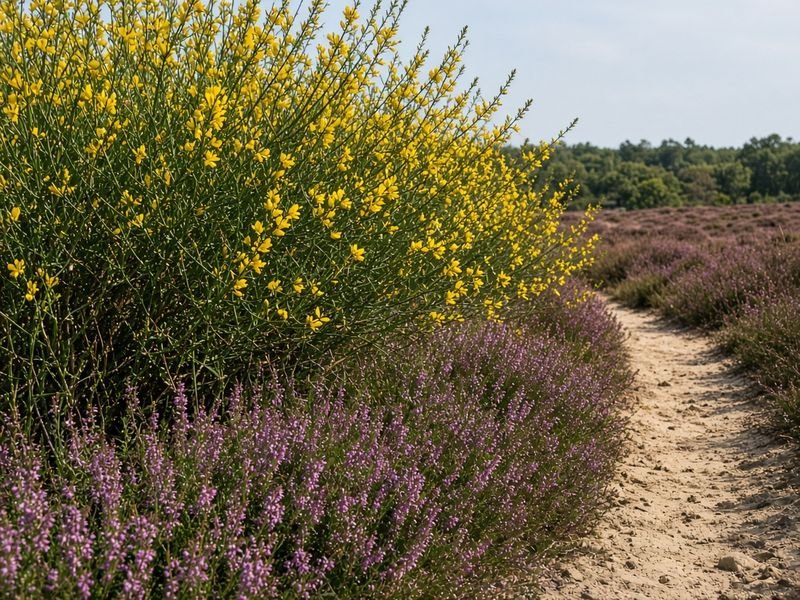
On sandy, acid ground the meadow gives way to heath: gorse in yellow, heather in purple by late summer, and a sandy path warm enough for lizards and solitary bees.
Meadows, hedgerows and wild corners
Kathryn Bromfield is an editorial site about Britain’s wildflower meadows, hedgerows and the small wild corners anyone can leave in a garden. It looks at what flowers when, why late mowing matters and how a strip of long grass fills with life.
The meadow
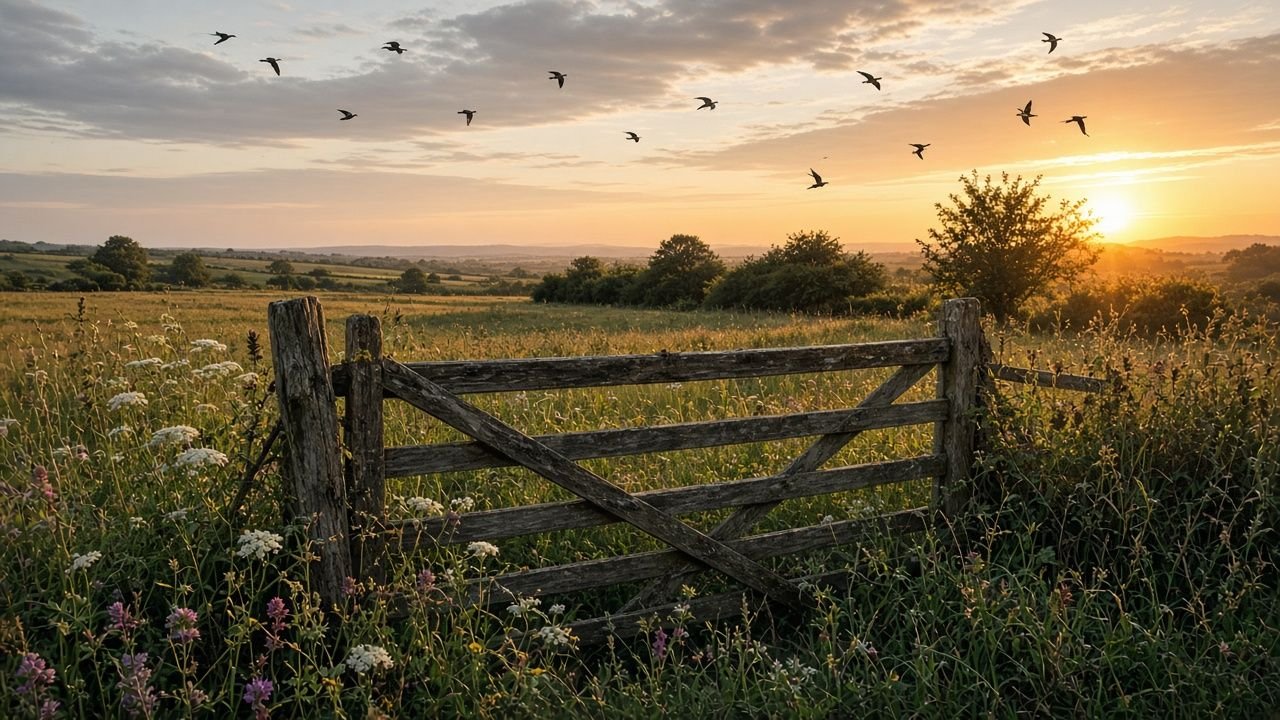
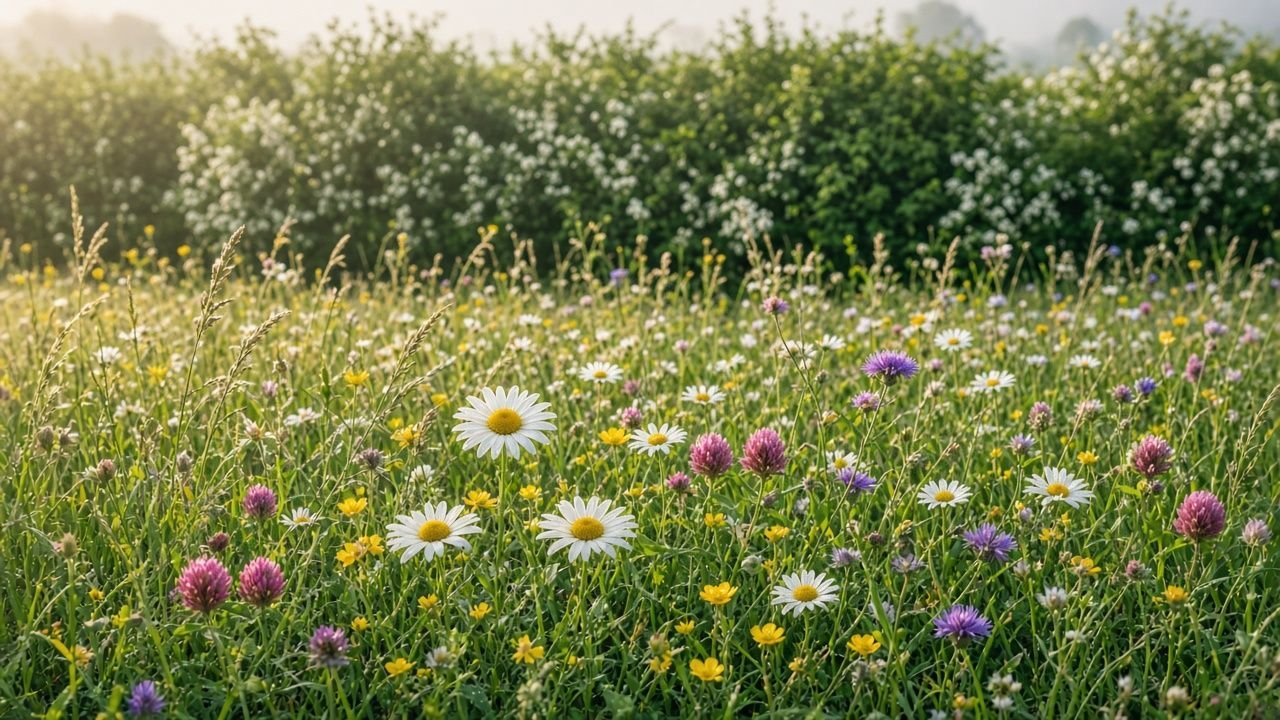
For centuries, hay meadows were simply part of farming. Grass was left to grow through spring and early summer, cut for winter fodder in July, then grazed. That rhythm let flowers set seed every year, and over generations the fields filled with dozens of species.
Most of those old meadows have gone, ploughed or fertilised into a single kind of grass. What remains is precious, but the good news is that the rhythm is easy to copy, on a verge, in a churchyard or in the far end of a lawn.
The hedgerow
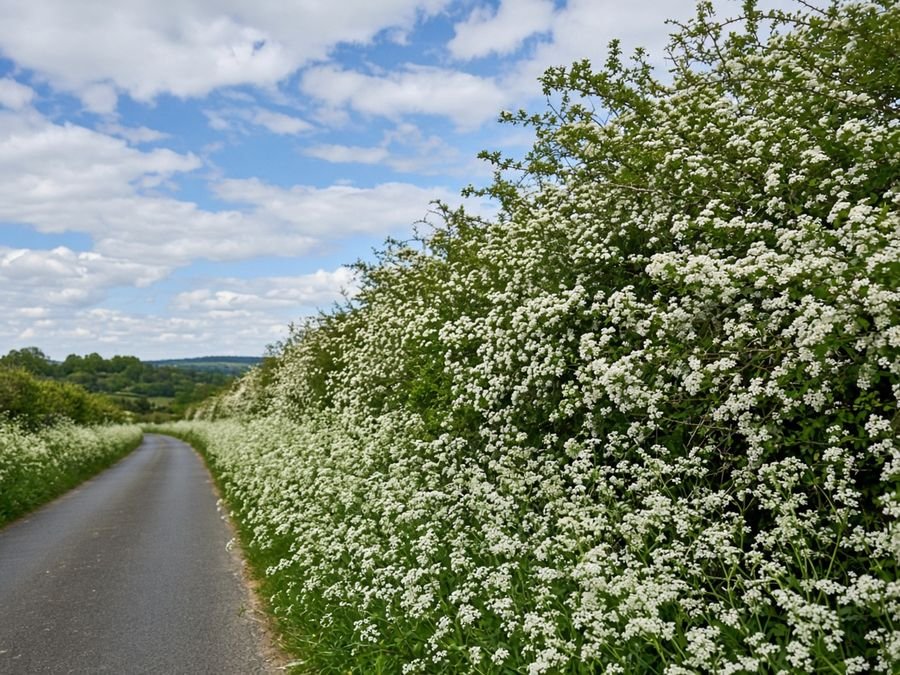
Old hedgerows are layered like a woodland edge: shrubs at the top, scrambling roses and bramble in the middle, and a flowery bank at the base. Each layer feeds and shelters something different.
The flowering year
Roughly when six familiar meadow flowers bloom in southern Britain. Dates shift with the weather and run later further north.
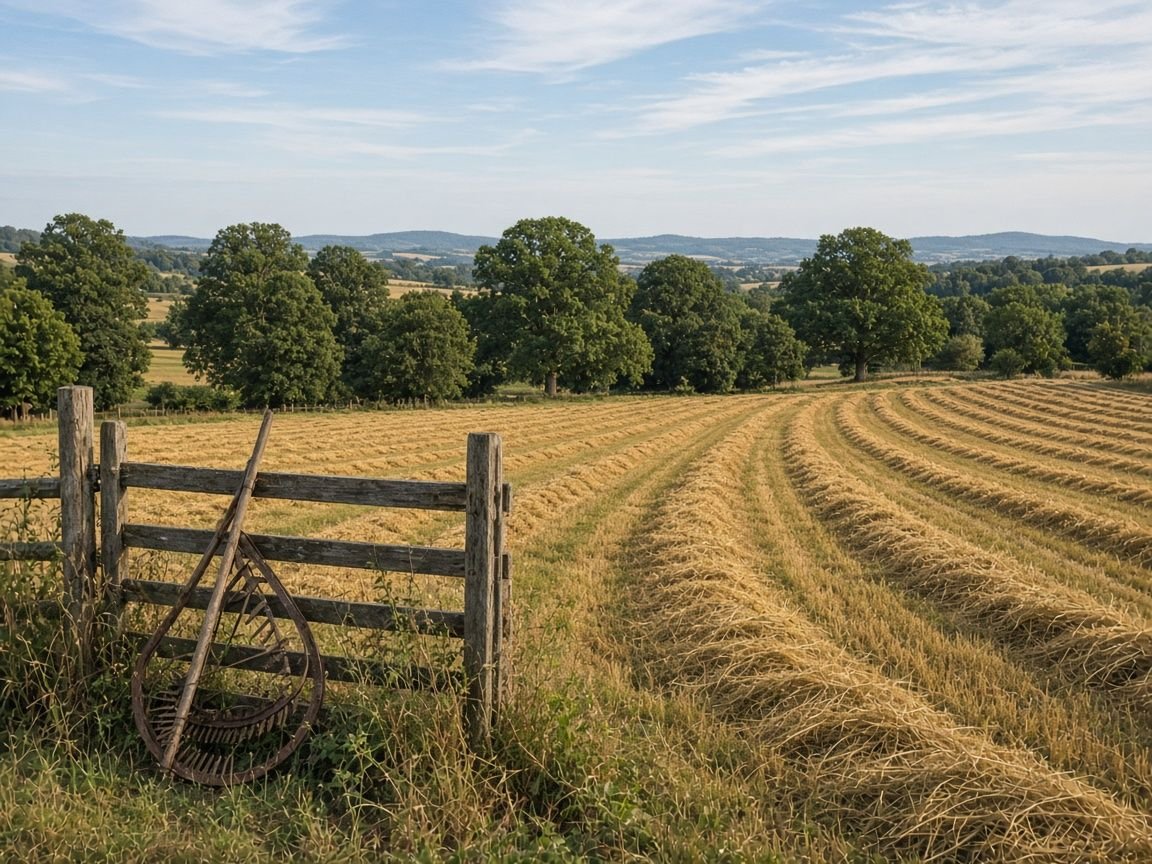
Cut late, after the flowers have dropped their seed, and next year’s meadow is already sown.
Start with a strip
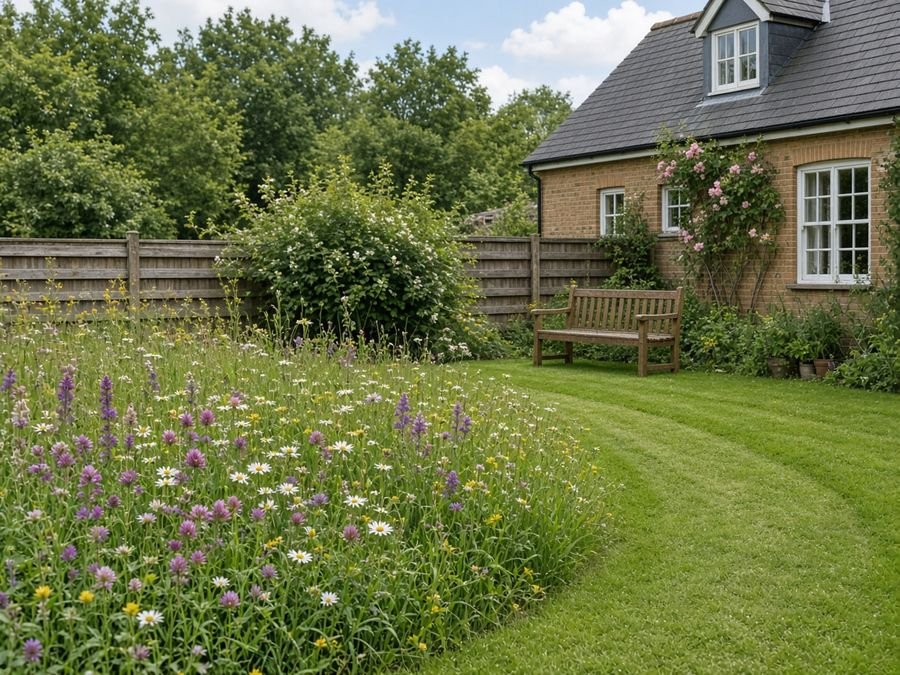
Leave a strip along a fence or under a tree uncut from spring until late summer and see what comes up. Self-heal, clover, buttercups and bird’s-foot trefoil are often already waiting in the lawn.
Mow a neat path through the long grass and the whole thing looks intended. Cut the strip once in late summer, rake the clippings away, and the soil slowly becomes poorer, which is exactly what wild flowers like.
After dark
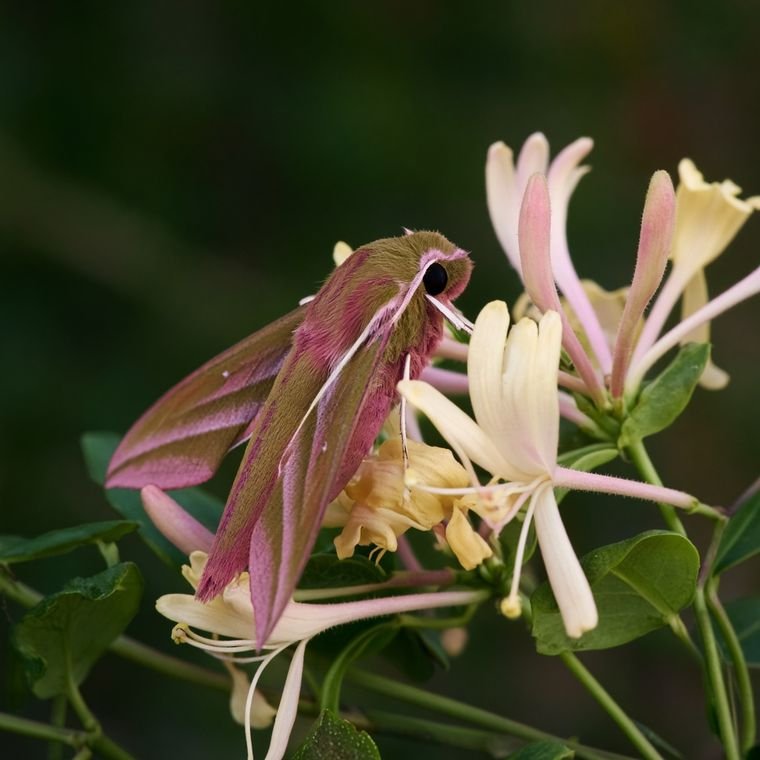
On a warm June evening a hedge comes alive with moths. The elephant hawk-moth, pink and olive, hovers at honeysuckle flowers, which release their scent most strongly at dusk to draw it in.
Moths pollinate many wild flowers and feed bats and birds. A hedge or wild corner left untidy over winter gives their caterpillars and pupae somewhere to wait.
Wild corners
On sandy, acid ground the meadow gives way to heath: gorse in yellow, heather in purple by late summer, and a sandy path warm enough for lizards and solitary bees.

Autumn is sowing time for many meadow flowers. Yellow rattle in particular needs a winter’s cold to germinate, and it weakens vigorous grass so other flowers can find room.