The hedgerow
Hedgerows
Hedgerows are among the most important wildlife habitats in the British countryside, acting as food store, shelter and corridor all at once.
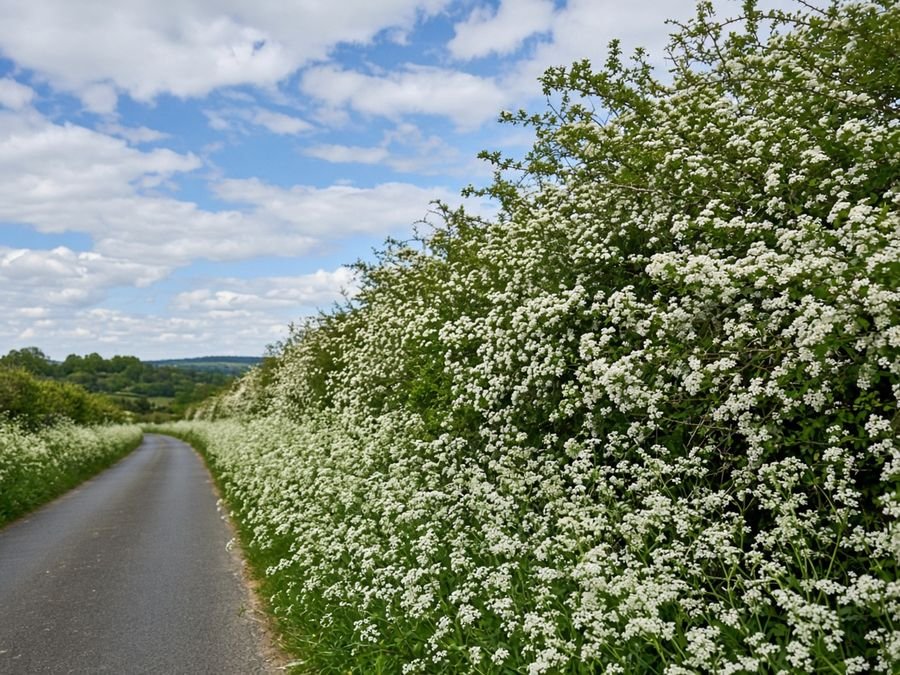
A woodland edge in a line
A healthy hedge has structure: dense shrubs such as hawthorn, blackthorn and hazel, climbers like dog rose, honeysuckle and bramble, and a flowery base or bank.
Through the seasons
Blackthorn flowers in March and April before its leaves appear, hawthorn follows in May, and dog roses in June. Autumn brings haws, sloes, hips and blackberries for birds and small mammals.
Corridors
Hedges link woods and fields, letting hedgehogs, dormice, bats and insects travel safely across farmland.
Cutting less often
Cutting a hedge every two or three years rather than every year, and in late winter rather than autumn, leaves more flowers and berries. Avoid cutting during the bird nesting season.
Hedgerows on farmland may be protected by regulations. Check before removing or significantly altering one.